
Blog
Neonatal Jaundice

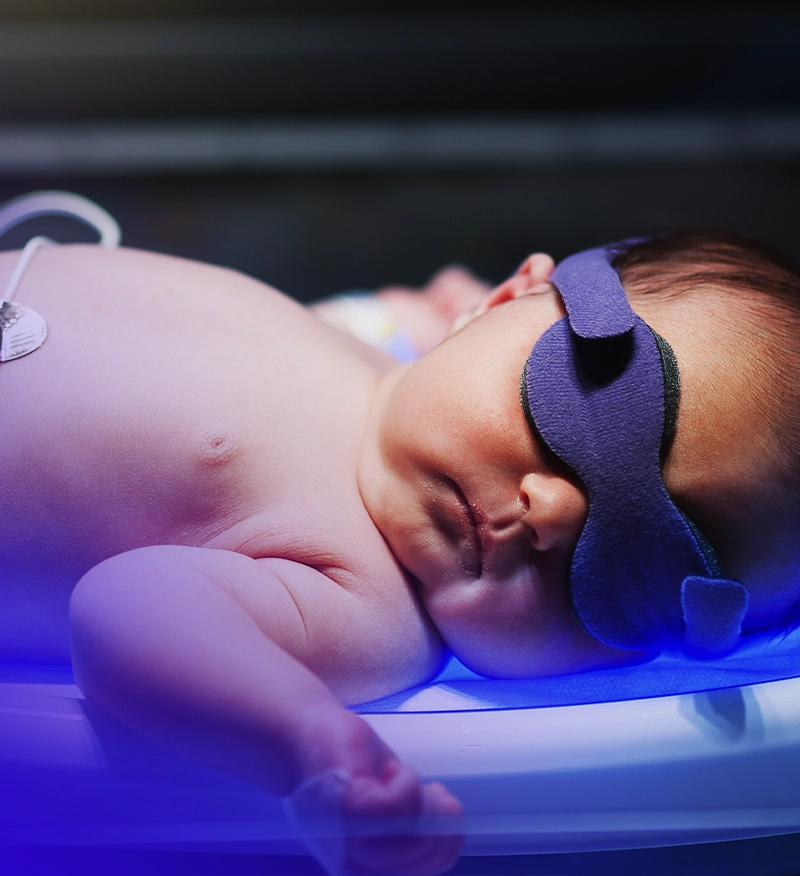
NEONATAL JAUNDICE
Neonatal jaundice is a common condition in newborns, affecting about 60% of full-term babies and up to 80% of premature ones. It causes a yellow tint to the skin and eyes due to high levels of bilirubin, a substance produced when red blood cells break down. Most cases are harmless and resolve on their own, but it’s important to monitor and understand it
What Causes Neonatal Jaundice?
Jaundice in newborns can stem from several factors, often related to the baby’s transition from life inside the womb:
Physiological Jaundice: The most common type, occurring in healthy babies. It happens because newborns have more red blood cells than needed after birth, which break down quickly. Their livers are still maturing and can’t process the bilirubin fast enough.
Breastfeeding Jaundice: Seen in breastfed babies during the first week. It may occur if the baby isn’t feeding well, leading to dehydration or low calorie intake, which slows down bilirubin removal.
Breast Milk Jaundice: A rarer form starting after the first week, possibly due to substances in breast milk that interfere with bilirubin processing. It can last several weeks but is usually benign.
Other Causes:
Blood group incompatibilities (e.g., Rh or ABO incompatibility) where the mother’s antibodies attack the baby’s red blood cells.
Infections, such as sepsis or urinary tract infections.
Genetic conditions.
Bruising or bleeding during birth, increasing red blood cell breakdown.
Prematurity, as preterm babies have even less mature livers.
If your baby shows signs of jaundice in the first 24 hours or if it persists beyond 2-3 weeks, further tests may be needed to rule out underlying issues.
How Does Neonatal Jaundice Happen?
Jaundice occurs due to an imbalance in bilirubin production and elimination:
1. Bilirubin Production: When old red blood cells are broken down, they release hemoglobin, which is converted into bilirubin. Newborns naturally have higher red blood cell turnover after birth.
2. Liver Processing: The liver normally “conjugates” (modifies) bilirubin to make it watersoluble so it can be excreted in stool and urine. In newborns, the liver enzymes are not fully developed, leading to a buildup of unconjugated (unprocessed) bilirubin in the blood.
3. Buildup and Symptoms: Excess bilirubin deposits in the skin and whites of the eyes, causing the yellow color. It starts on the face and can spread downward if levels rise. High levels can cross into the brain (kernicterus) if untreated, potentially causing hearing loss, vision problems, or developmental issues—though this is rare with proper care.
Jaundice typically appears 2-3 days after birth, peaks around day 3-5, and fades by 1-2 weeks in full-term babies.
Signs to Watch For
Yellowing of the skin, starting from the head and moving down.
Yellow sclera (whites of the eyes).
Dark urine or pale stools (may indicate a more serious issue).
Poor feeding, excessive sleepiness, or high-pitched crying. Contact your doctor immediately if jaundice appears in the first 24 hours, worsens after day 5, or if your baby seems unwell
Management of Neonatal Jaundice
Most cases don’t need treatment, but we monitor closely to prevent complications:
Monitoring: We’ll check your baby’s bilirubin levels with a simple skin test (transcutaneous bilirubinometer) or blood test. Regular check-ups in the first week are key.
Feeding Support: Encourage frequent breastfeeding (8-12 times a day) to help flush out bilirubin through stool. If needed, supplement with formula temporarily—don’t stop breastfeeding without advice.
Phototherapy: If bilirubin levels are high, your baby may need light therapy. Special blue lights break down bilirubin in the skin, making it easier to excrete. This is done in hospital with eye protection for the baby.
Advanced Treatments: In rare severe cases:
Intravenous fluids for dehydration.
Exchange transfusion to replace the baby’s blood and remove excess bilirubin.
Medications for specific causes, like infections.
Home tips: Expose your baby to indirect sunlight (not direct, to avoid sunburn), but this isn’t a substitute for medical care.
Prevention and Follow-Up
Early and frequent feeding helps prevent dehydration-related jaundice.
Attend all newborn check-ups.
If your family has a history of jaundice or blood disorders, inform your doctor. Remember, neonatal jaundice is usually temporary and treatable.