
Blog
Bronchiolitis

What is bronchiolitis?
This is an infection that affects a part of the lungs called the “bronchioles.” The bronchioles are the small, branching tubes that carry air in and out of the lungs. When these tubes are infected, they get swollen and full of mucus . This makes it hard to breathe.
Bronchiolitis most often affects children younger than 2 years of age. It is usually caused by a virus. In most children, it goes away on its own. But some children need to be seen by a doctor.
What is RSV?
RSV stands for “respiratory syncytial virus.” It is the most common cause of bronchiolitis.
What are the symptoms of bronchiolitis?
Bronchiolitis usually begins like a regular cold. Children usually have these symptoms at first:
Stuffy or runny nose
Mild cough
Fever (temperature higher than 100.4°F, or 38°C)
Decreased appetite As bronchiolitis progresses, other symptoms can start, including:
Breathing faster than normal
Pauses between breaths – Sometimes, a pause can last more than 15 or 20 seconds.
Wheezing – This is a whistling sound when breathing. It usually lasts about 7 days.
Severe cough – The cough can last for 14 days or longer.
Trouble eating and drinking – Other symptoms can make a child less interested in food. In babies, a stuffy nose or fast breathing can make it harder to breastfeed or drink from a bottle.
Will my child need tests?
It depends. Your child’s doctor or nurse will be able to tell if they have bronchiolitis based on their symptoms. In some cases, they might do tests to figure out the cause. This can tell them if your child has RSV or another viral infection like the flu.
How is bronchiolitis treated?
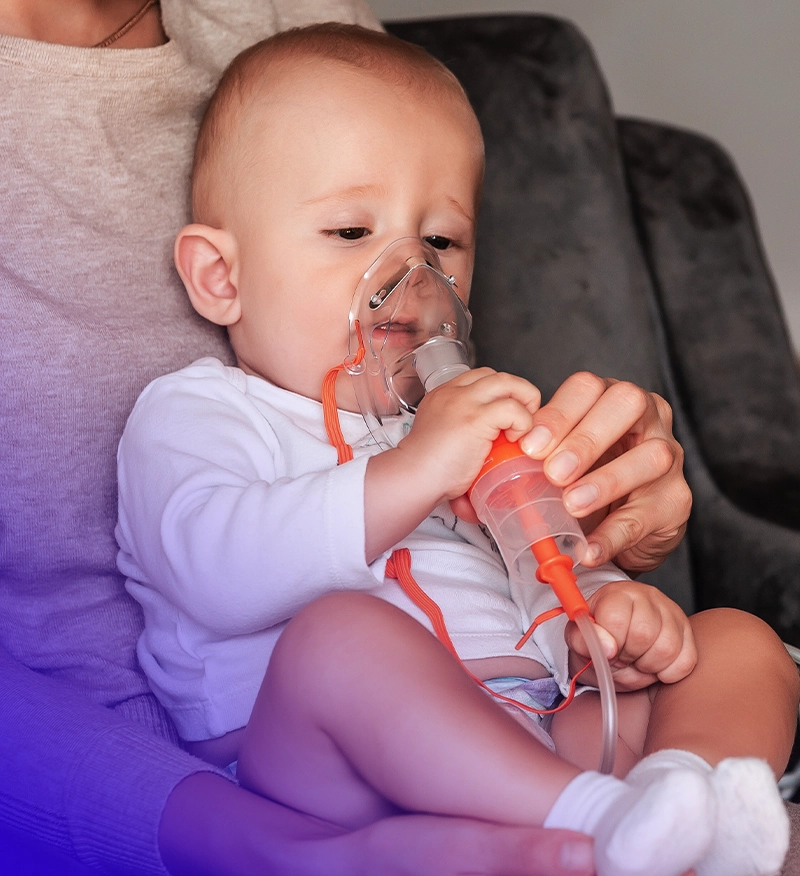
The main treatments are aimed at making sure that your child gets enough oxygen. To do that, the doctor or nurse might need to suction the mucus from your child’s nose, or give them moist air or oxygen to breathe.
The doctor will probably not prescribe antibiotics. That’s because bronchiolitis is caused by viruses, and antibiotics do not work on viruses
What can I do on my own to help my child feel better?
Here are some things you can do:
Make sure that your child gets enough fluids. Call the doctor or nurse if your baby has fewer wet diapers than normal.
Use a humidifier in the room where your child sleeps.
If your child is uncomfortable because of fever, you can give them over-thecounter medicines, such as Panado or ibuprofen (sample brand names:). Read the instructions carefully. Never give aspirin to a child younger than 18 years old.
Remove the mucus from your child’s nose with a suction bulb or other suction device.
If your child is older than 1 year, feed them warm, clear liquids to soothe their throat and help loosen mucus.
Prop your child’s head up on pillows if they are over 1 year old. (Do not use pillows for a child younger than 1 year.)
Sleep in the same room as your child, in a separate bed, so you know right away if they start having trouble breathing.
Do not smoke or let anyone else smoke near your child. If your child’s symptoms get worse, call their doctor or nurse for advice.
How did my child get bronchiolitis?
Bronchiolitis is caused by viruses, including RSV, that spread easily from person to person. These viruses live in the droplets that go into the air when a sick person coughs or sneezes.
Can bronchiolitis be prevented?
Experts recommend that premature babies get a shot to protect against RSV. This lowers the risk of infection and serious illness. If your baby is younger than 8 months old during their first RSV season, talk to their doctor about the shot. Pregnant people can also get a vaccine to help protect their baby from RSV. If you got the vaccine during pregnancy, your baby might not need the RSV shot. There are also other things you can do to protect your child from viruses that can cause bronchiolitis. These things also help prevent other illnesses, like colds, the flu, and COVID-19. You can help prevent infections from spreading if you:
Wash your hands and your child’s hands often with soap and water or use alcohol-based hand sanitizer
Teach your child to cover their mouth when they cough or to cough into their elbow.
Do not share glasses, cups, or utensils.
Clean things that are touched a lot, such as counters, sinks, doorknobs, phones, remotes, and light switches.
Stay away from people who are sick.
Make sure that your child gets all of their recommended vaccines
When should I call the doctor?
Call for an ambulance if your child:
Stops breathing
Has blue or gray lips, gums, or fingernails
Has a very hard time breathing
Starts grunting
Looks like they are getting tired from working so hard to breathe Call your child’s doctor or nurse if:
The skin and muscles between your child’s ribs or below their ribcage look like they are caving in
Your child’s nostrils flare (get bigger) when they take a breath.
Your baby is younger than 3 months and has a fever (temperature greater than 100.4°F, or 38°C).
Your child is older than 3 months and has a fever (temperature greater than 100.4°F, or 38°C) for more than 3 days.
Your baby has fewer wet diapers than normal.
You have other questions or concerns about your child.